Pop-up Canopies
10x10 ft Pop-up Canopy Rentals
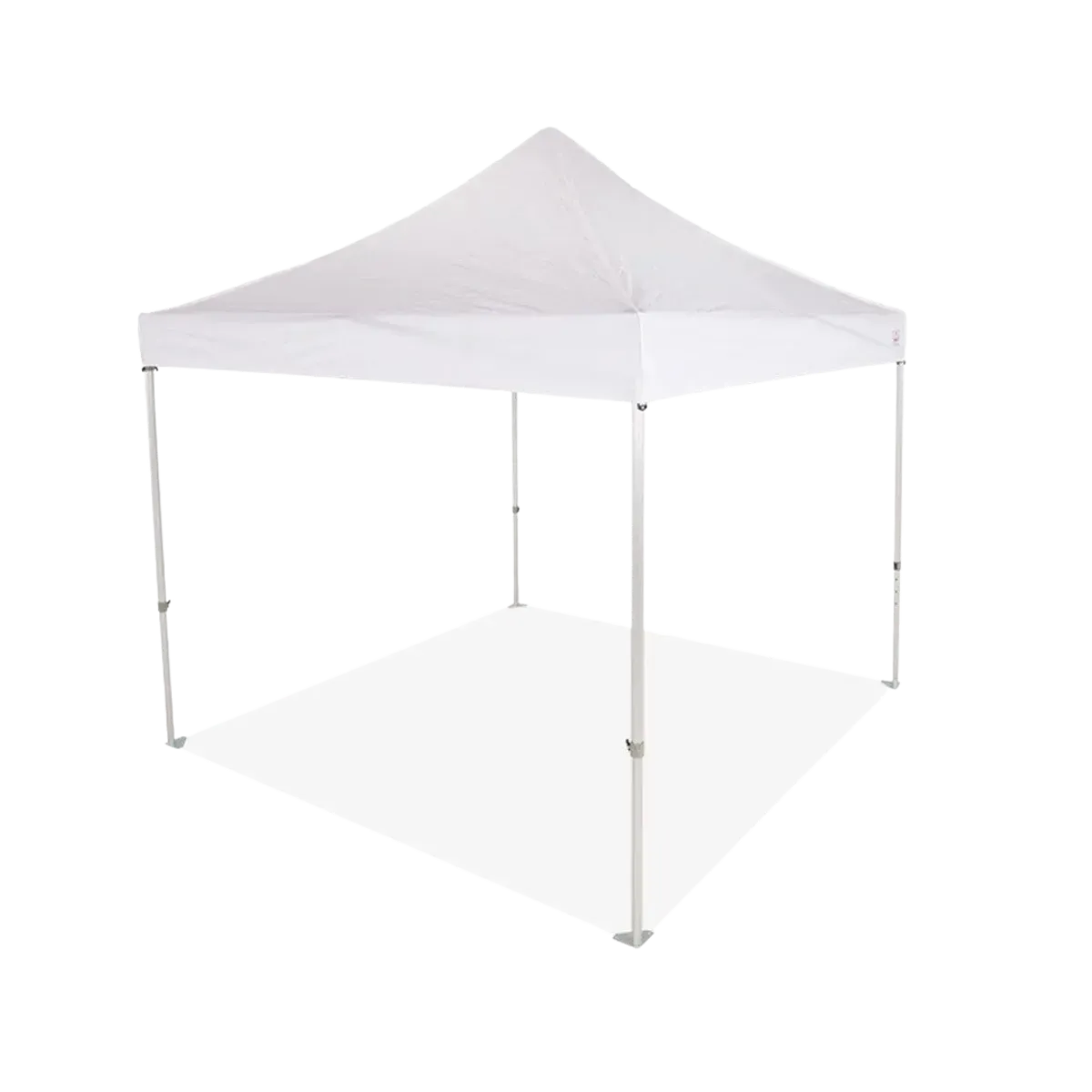
The standard booth footprint — 100 square feet, up in minutes, on the only canopy frame in the group with a published overhead load.
On the list. See the list
Specifications
The truss is the part worth paying attention to.
It carries up to 120 lb, which means your lighting rig and your signage hang overhead instead of standing on the floor. In a 100 sq ft booth that is not a nicety — every square foot a light stand occupies is a square foot your staff cannot stand in. Two of the four legs run on integrated wheels, which is what you notice when the load-in door turns out to be at the far end of the building.
| Footprint | 10 × 10 ft — 100 sq ft |
|---|---|
| Top fabric | 300D silver-coated polyester, UPF 50+ |
| Weatherproofing | Water-repellent coating with factory-sealed seam tape |
| Fire rating | CPAI-84 |
| Frame | Steel truss with hardened bolts and reinforced eaves |
| Overhead load | Up to 120 lb hung from the truss |
| Sidewalls | Four, removable, included |
| Transport | Wheeled bag; two legs run on integrated wheels |
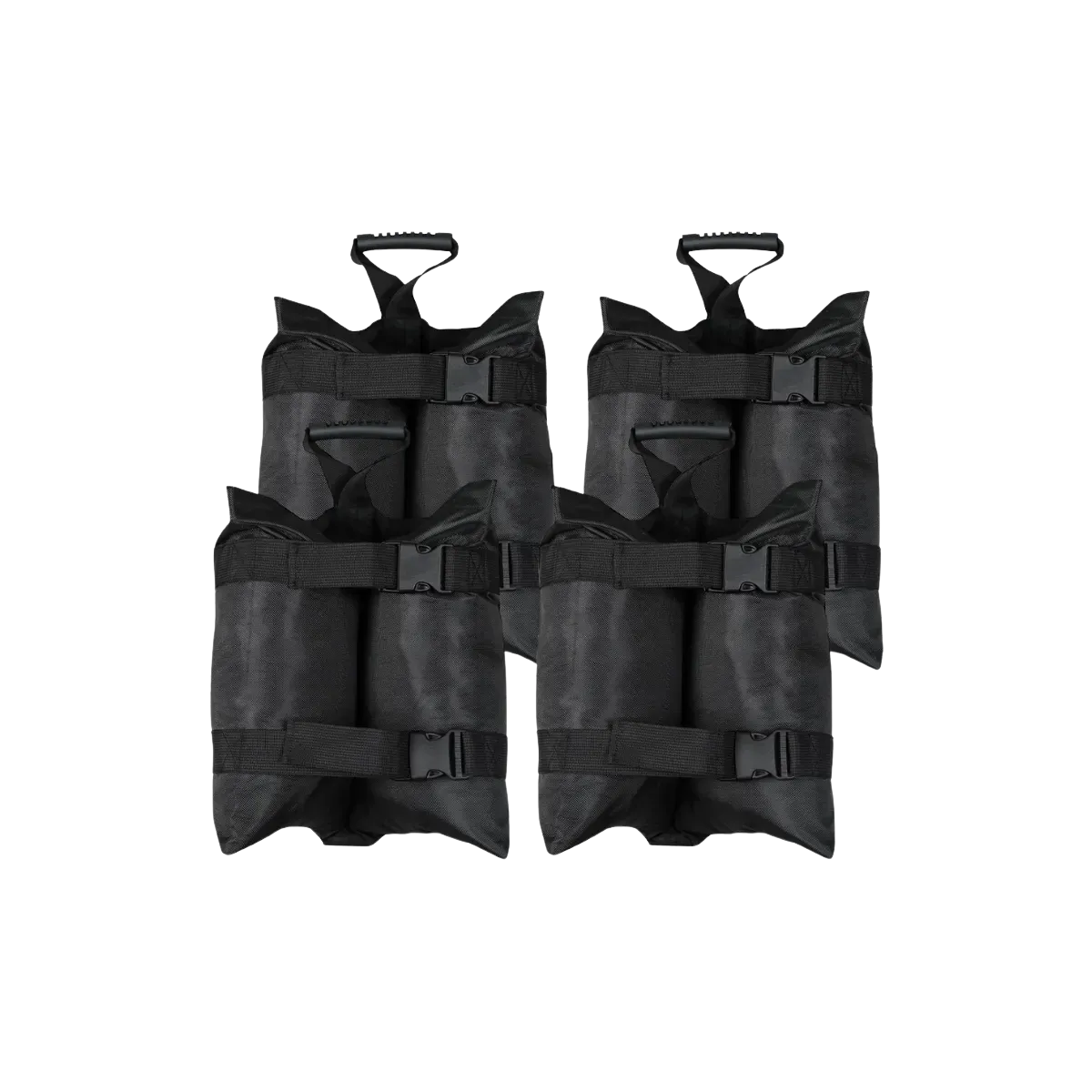
| Anchoring | Stakes on grass, ballast on hard ground — weight on every leg |
Where a booth-sized frame lands
Six places the 10 by 10 is the unit you were assigned.
Vendor rows
The footprint a market or a festival hands out by default. Booking the size the organiser drew means your frame lines up with the ones on either side of you instead of overhanging them.
Sponsor activations
One table, two staff and a giveaway. Enough room to work behind the table without backing into the leg, which is the difference between a shift and a long shift.
Registration desks
A check-in point with the queue outside the footprint rather than inside it. The walls go on the weather side so the printed lists survive the afternoon.
Single food or drink stations
A coffee cart, a taco stand, one service window. The wheeled bag matters here more than anywhere, because these get moved between two sites in a weekend.
Shade over a fixed point
A timing hut, a first-aid post, a marshal position — anywhere somebody has to stay put for six hours and the sun does not.
Overflow cover on a tight site
Where there is no room for a bigger span. Ten by ten fits into gaps in a site plan that nothing else in the range will.
What keeps it on the ground
On pavement, the bags are the anchoring system.
Stakes do nothing on a paved surface and a canopy carries wind load whether or not the walls are on. Four legs, four ballast points — that is the arithmetic on hard ground and it does not change because the forecast looks settled.
See tent ballast