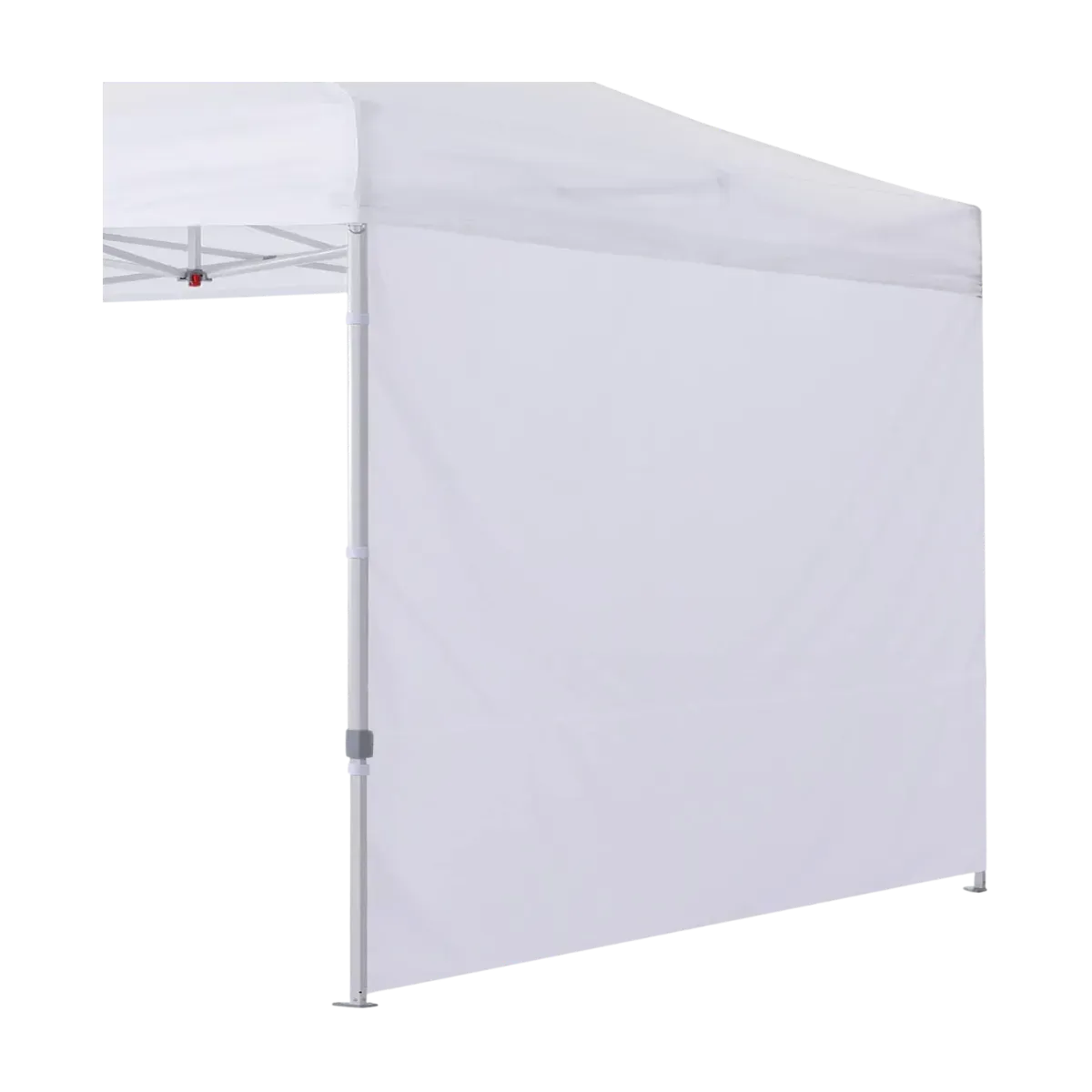
Tent Sidewalls
Tent Sidewall Rentals
Walls turn a canopy from shade into a room.
On the list. See the list
Specifications
Hooks, not hook-and-loop.
The panels hang on hooks and they are cut for the canopies we rent, so there are no adapters to find and no gaps left at the corners — tell us which canopy you have booked.
| Fabric | 150D polyester |
|---|---|
| Coating | Silver, over a waterproof layer |
| Sun protection | UPF 50+ |
| Fixing | Hooks — not hook-and-loop |
| Fits | The pop-up canopy frames we rent, at every size |
| Ordered by | The panel, so one wall is a valid order |
| Full enclosure | Four panels close a canopy on all sides |
| With ballast | Required on every leg once any wall is fitted |
When a panel goes on
Five reasons a panel goes on.
A single wind break
One panel on the exposed flank is often all an outdoor booth needs. One panel is an order we will take.
Hiding the back-of-house
Stock, cases, cabling and the kettle. A wall across the back turns the untidy half of a booth into something a guest never sees.
Driving rain
A roof handles water coming straight down. Water coming in at an angle is what soaks a registration desk and that is a wall problem rather than a roof problem.
Making a lockable space
Four panels close a canopy completely, which turns it into somewhere kit can be left rather than somewhere it has to be watched.
Low afternoon sun
Late light comes in under the eaves at exactly the height a screen or a display sits at. One panel on the west side fixes a problem no amount of roof will.
What they hook onto
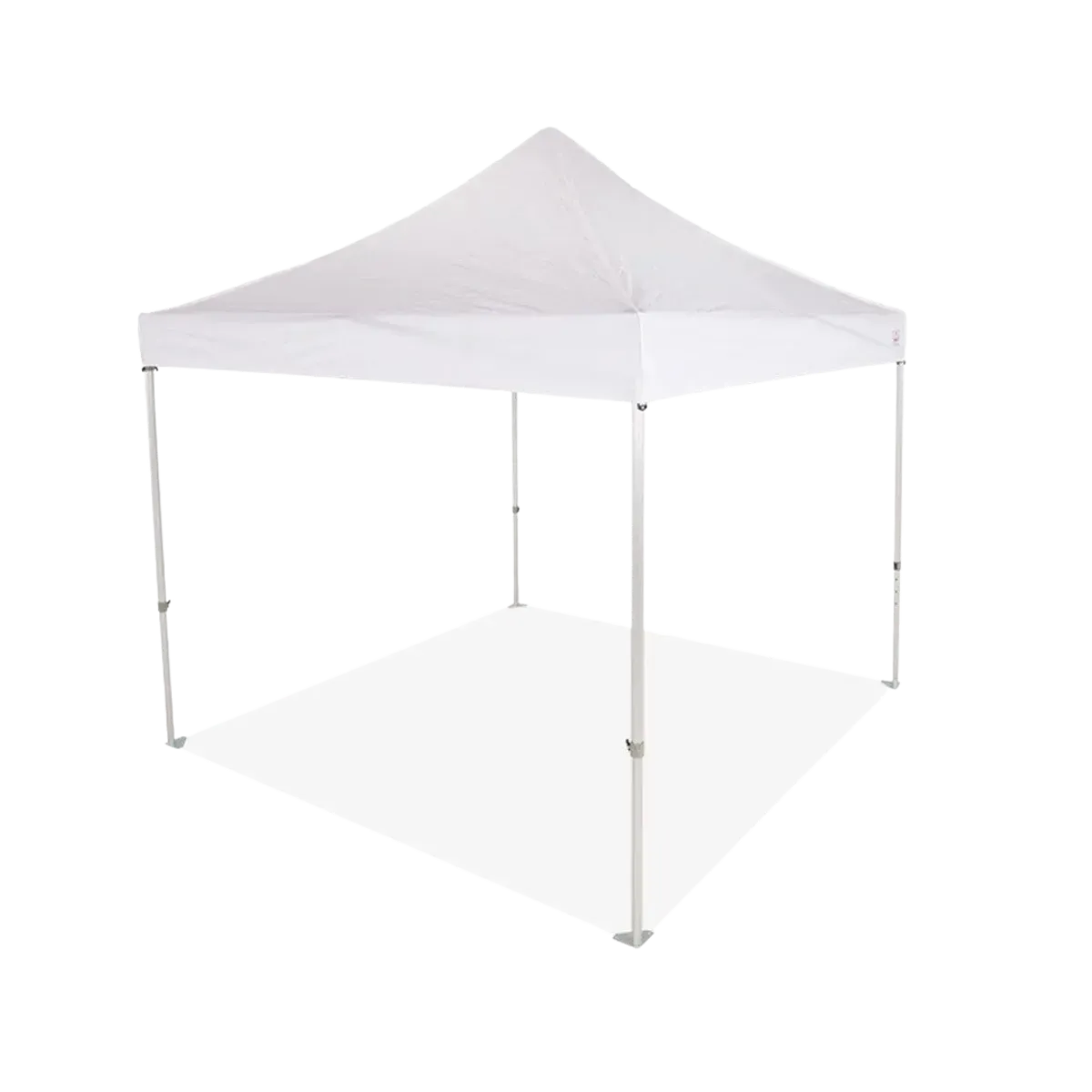
Walls are half an order without a frame.
These fit every pop-up canopy frame we rent and the one most orders start from is the 10 × 10 — a hundred square feet on a steel truss. If the frame is coming from somewhere else, say whose it is before the panels are booked: the hooks are cut for ours.
See the 10 × 10 canopy