
Flooring & Staging · interlocking floor tile
Interlocking Floor Tile Rentals
The fastest way to put a finished floor over a surface you did not choose. Tiles snap together by hand, follow whatever footprint you mark out and come up again at the end of the night without adhesive, tape or a single tool.
Four finishes
Two modules, four surfaces.
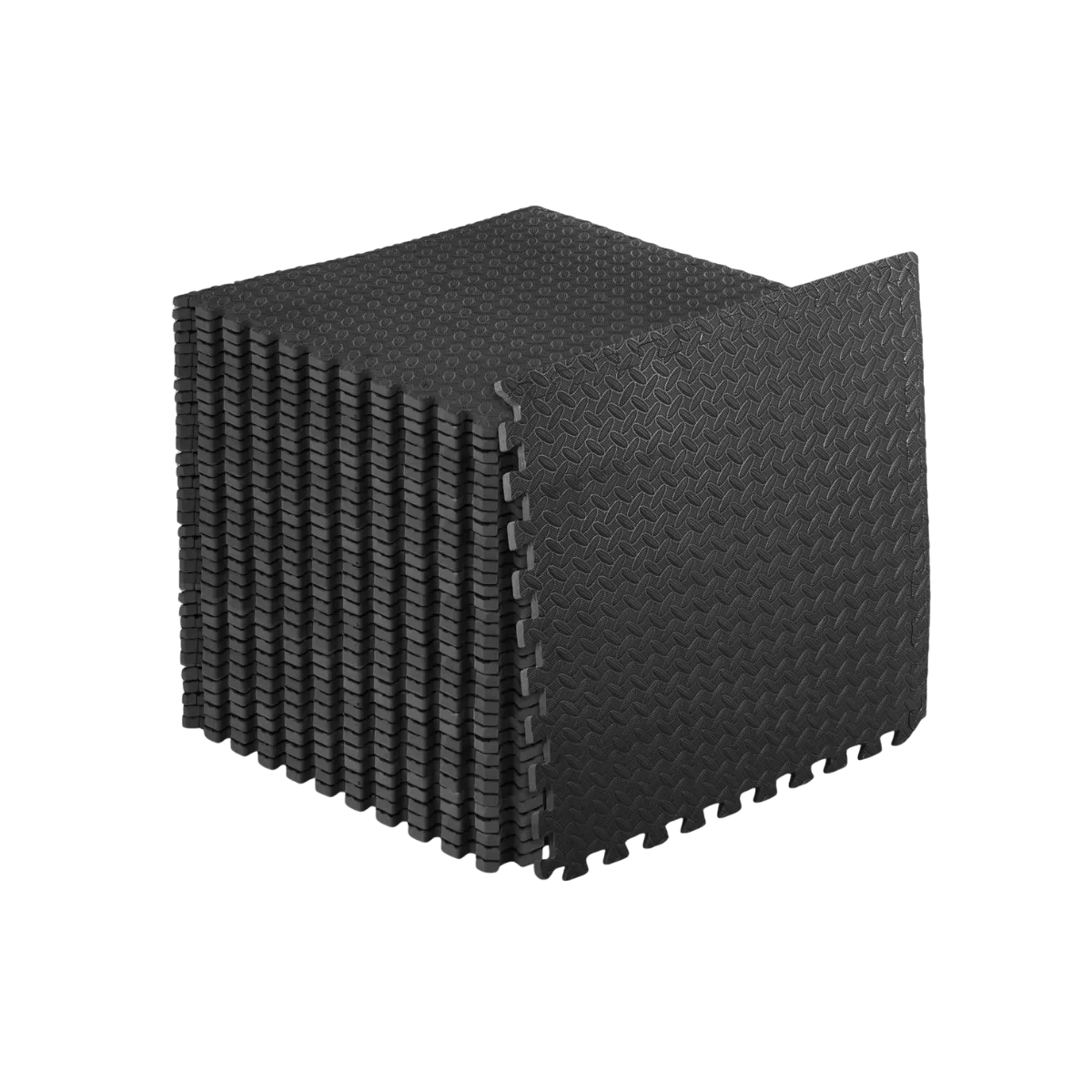
Black and grey are the 24-inch foam tile — half an inch thick, cushioned, sound-dampening and the pair we send out most. Wood-look and vented outdoor are a smaller module at 11.8 inches square, which is an advantage in a tight or awkward footprint because you reach the wall line before you have to trim. The two modules do not interlock with one another, so each page states its own tile size. Every finish comes with straight-edge border pieces and every one is quoted by the square foot to the area you give us.
Black Interlocking Floor Tile
The default. Recedes under lighting and hides scuffing best.
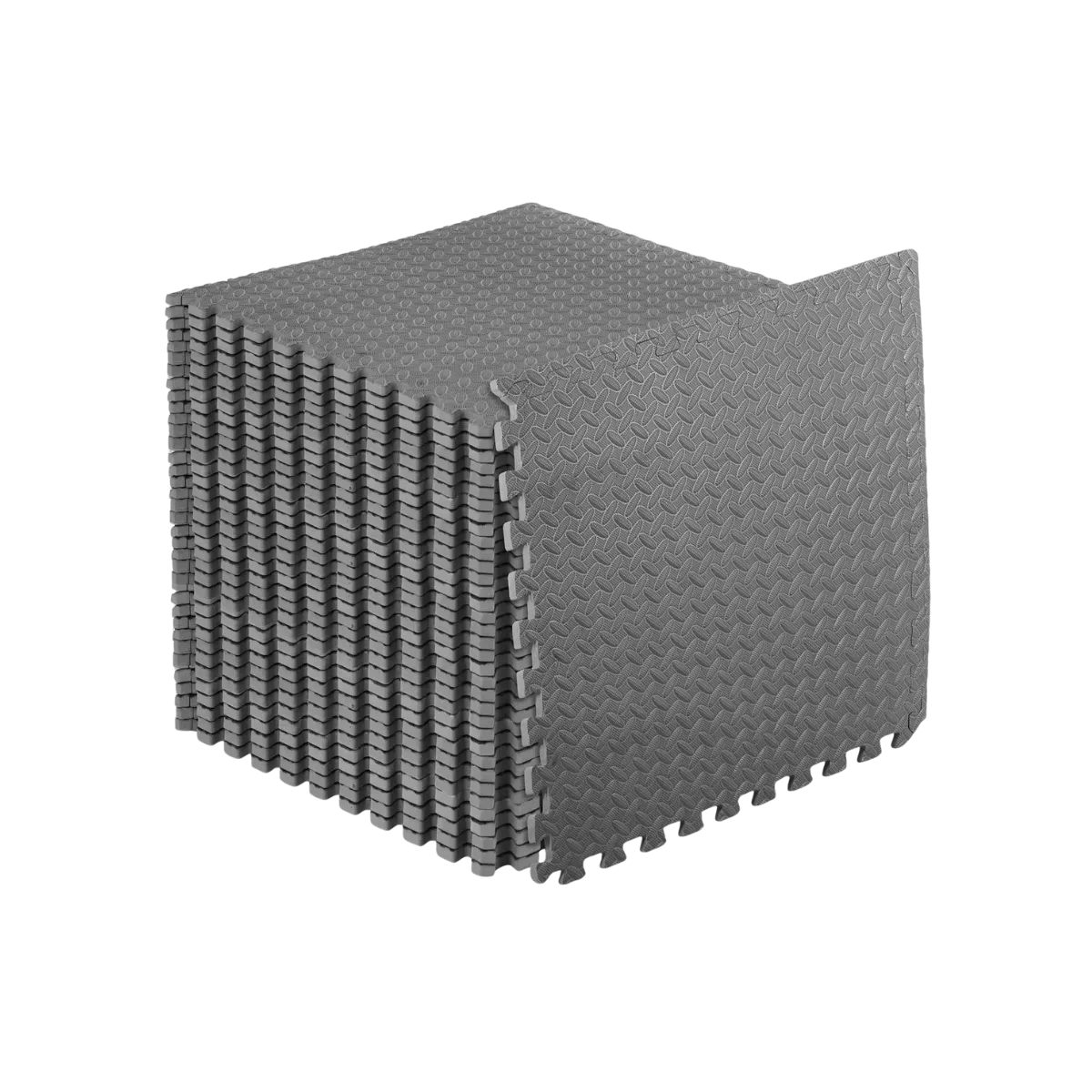
Grey Interlocking Floor Tile
For a bright room, where a black floor turns into a dark hole.
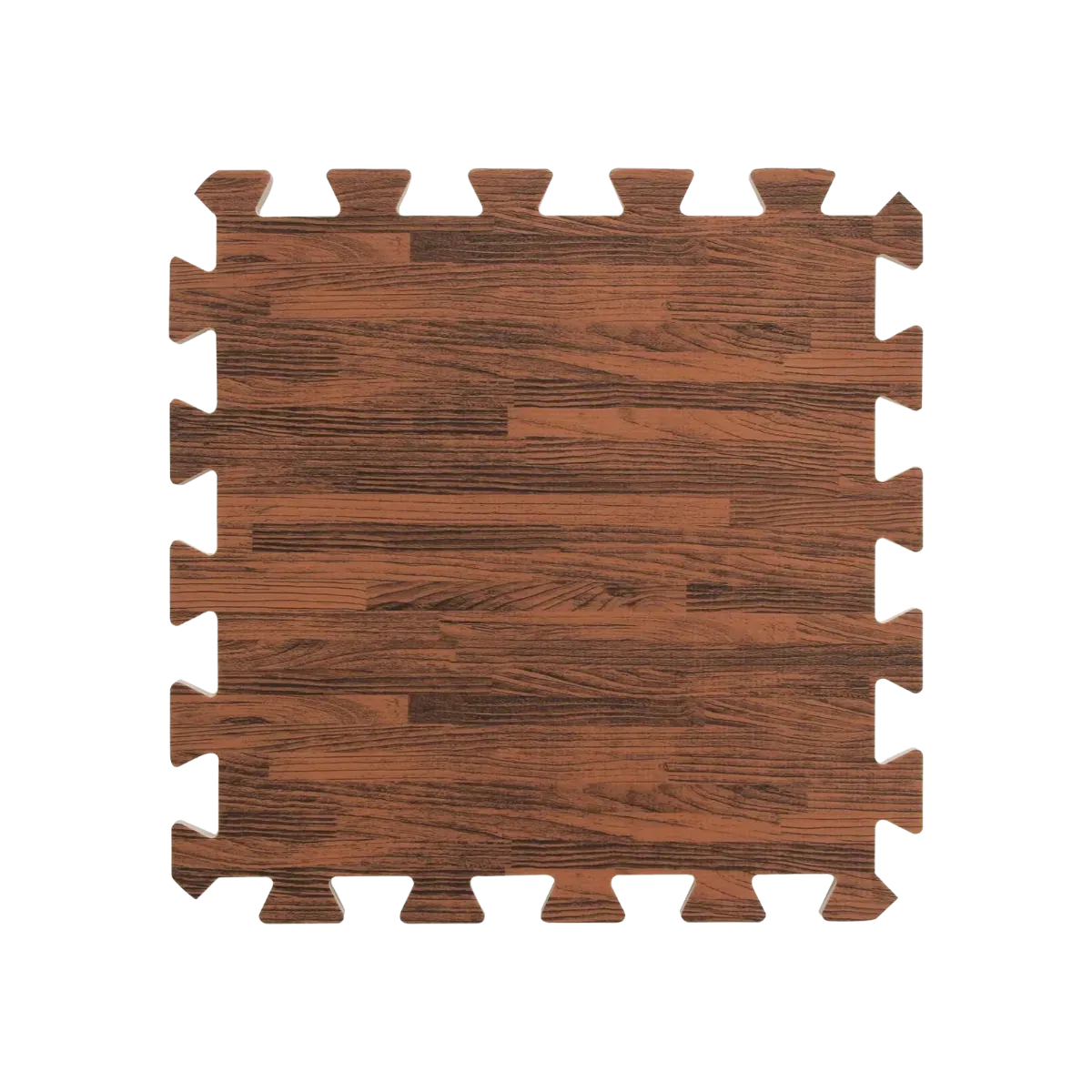
Wood-Look Interlocking Floor Tile
Printed grain, for a floor that is part of the set rather than under it.
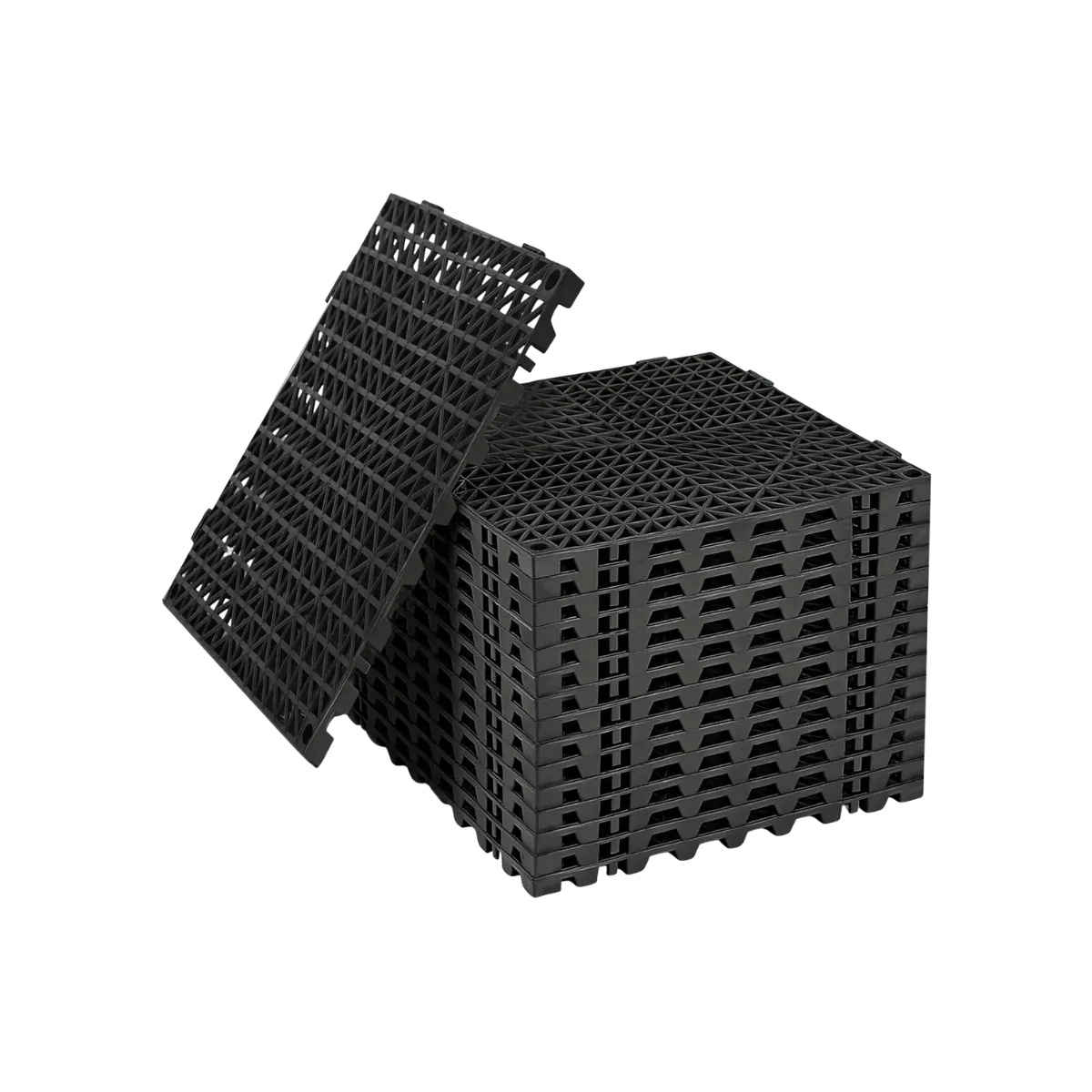
Vented Outdoor Interlocking Floor Tile
Raised PVC with drainage, for ground that will not stay dry.
What settles the finish
Three questions, in this order.
Is water going to be involved
This is the first question because it eliminates three of the four answers. Foam stops being the right tile the moment there is standing water, rain or a hose in the picture and the vented outdoor tile is the only one of these built to let it through.
Is the floor meant to be seen
A base that should disappear under lighting takes black. A floor that is part of the look — a lounge set, a retail-style booth, an interview corner — takes the wood-look. Grey sits between the two and wins in daylight, where black reads heavy.
What is underneath it
The foam tiles want a hard, flat indoor surface: concrete, hardwood, tile or a sealed floor. Not carpet — the pile lets tiles shift and pull apart underfoot. Tell us the surface with the request, because it changes what we bring rather than only what we quote.